For organisations and teams
Workplace Wellbeing

Most workplaces do not have a mental health problem to solve. They have people carrying a lot, often quietly, alongside deadlines and change and each other. I work with organisations to create spaces where that can be spoken about honestly, and where support feels genuinely available rather than announced once a year.

In English and Hindi, online anywhere or in person in Mumbai
Start a conversation
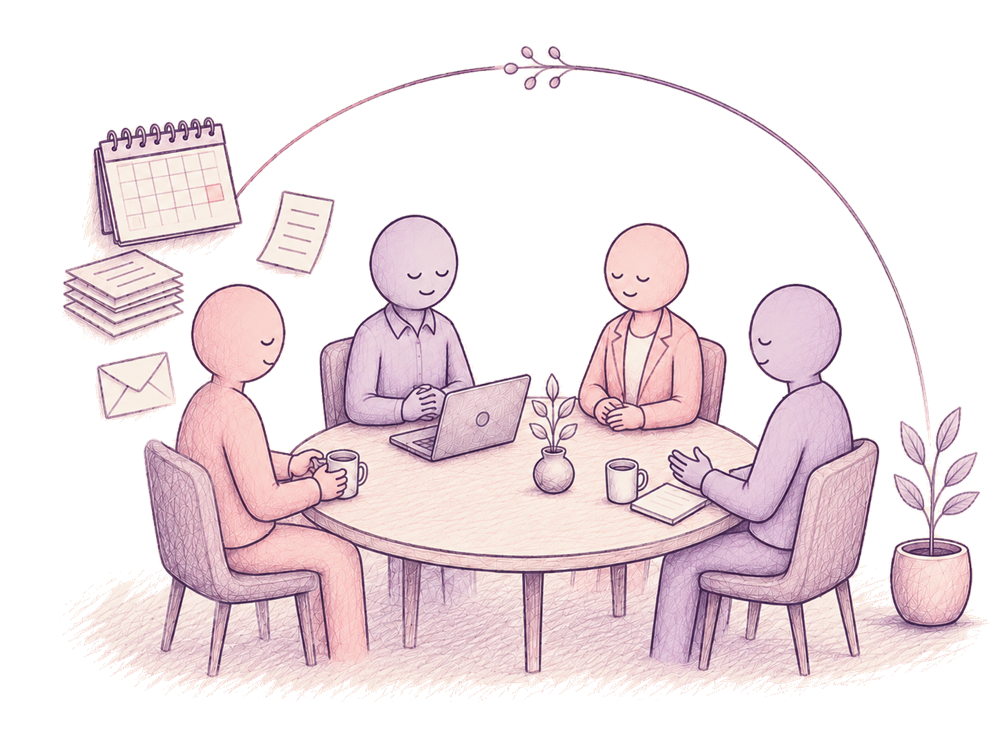
An illustration of four people sitting together around a round table with a laptop, mugs and a small plant, under a soft arc, with a calendar, papers and an envelope drifting to one side.
Why this matters

Beyond awareness

Wellbeing initiatives often stop at awareness. People learn what burnout is, but not what to do the following Monday, and rarely get a space to say how they are actually doing.

What I bring is clinical practice rather than a slide deck. Seven years of sitting with people through anxiety, exhaustion, difficult transitions and the ordinary weight of being human means the work stays practical, grounded, and free of jargon. The aim is that people leave with something they can use, and with a clearer sense that support is available if they want it.

Ways to work together

What I offer

Three starting points, each shaped around your organisation rather than delivered off a shelf.

Workshops

Interactive sessions for teams, built around a theme and shaped to your context. These are conversations rather than lectures, with room to reflect, ask, and practise. Suitable for whole teams, specific departments, or leadership groups.

One-on-one mini sessions

Short, confidential individual slots offered on site or online across a day or half day. For many people the hardest part of getting support is arranging it. This removes that step, and is often used for wellbeing days or during periods of real pressure or change.

Customised plans

A single session rarely shifts much on its own. If you are looking for something ongoing, I can build a plan around your team: a series across months, work focused on managers and how they hold their people, a combination of the above, or something built for a specific moment your organisation is moving through.

This tends to be the question underneath all the others, so it is worth saying plainly.

What an individual shares with me stays with them. Organisations do not receive names, notes, or any account of what was discussed. Where it is useful, I can share broad themes at a group level, with nothing that could identify a person. The one exception is a risk of serious harm, which is discussed openly upfront.

This is not a technicality. People only use these spaces when they trust them, and that trust is what makes the work worth doing.

Starting points

Themes we can work with

Stress, burnout, and the space between the two Emotional regulation in high-pressure work Boundaries, and what makes them hard to hold at work Communication, difficult conversations, and repair Psychological safety within teams Supporting a colleague who is struggling Navigating change, uncertainty, and transitions Rest, and why it is often the first thing to go

Or bring a theme of your own.

Getting started

How it works

Reach out
A short message about your organisation and what has prompted this is enough to start. By Email or WhatsApp.
A conversation
We talk through your context, your team, what has already been tried, and what you are hoping for. No obligation to go further.
A proposal
I come back with a suggested shape: format, length, themes, and how it might run.
We deliver it
Online or in person, in English or Hindi.
We look at how it went
What landed, what people asked for, and what might be worth doing next.
Who you would be working with

A little about me

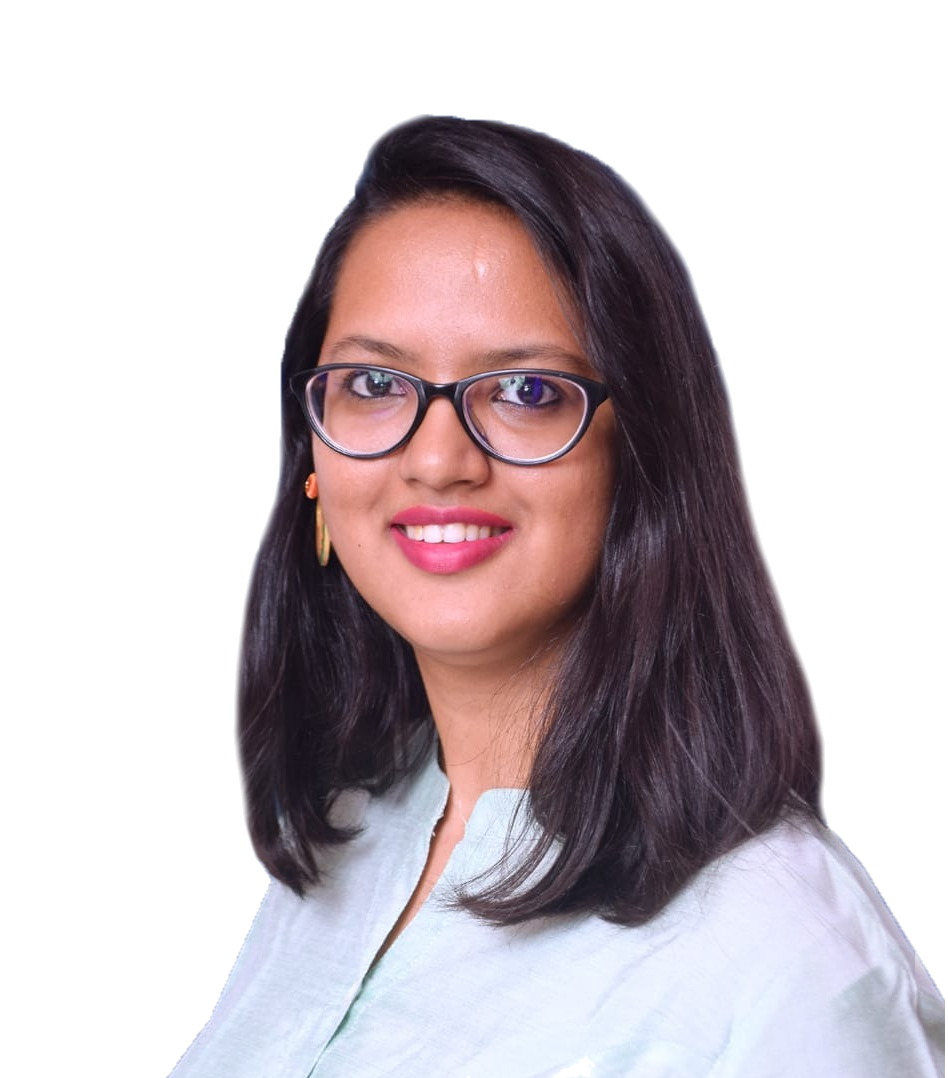
Harshita Sarda, psychotherapist and clinical supervisor.

I am Harshita Sarda, a psychotherapist and clinical supervisor based in Andheri West, Mumbai. I hold an MA in Clinical Psychology, a Diploma in Counseling Psychology from Xavier's College, and a Diploma in Supervision for Mental Health Practice from TISS. I have completed a Queer Affirmative Practice course with Mariwala Health Foundation and training in complex trauma with the ISSTD.

My work is trauma-informed, queer-affirmative, intersectional, and neurodivergent inclusive. In practice that means the room is built for the people actually in it, not an average of them.

More about my background

Good to know

Questions organisations ask

How large can a group be?

Workshops work well from small teams up to larger groups. Smaller groups allow more conversation, larger ones work better with a more structured format. Tell me your numbers and I will suggest what suits.

Online or in person?

Both. In person in Mumbai, and online anywhere.

How long does a session run?

Usually between 60 and 120 minutes depending on the theme and the size of the group, though this is flexible.

Will we be told what employees talked about?

No. What someone shares with me stays with them, and the organisation does not receive names, notes, or any account of what was discussed. Where it is useful I can share broad themes at a group level, with nothing that could identify a person. The one exception is a risk of serious harm, which is discussed openly upfront.

Can this be tailored to our industry?

Yes, and it usually should be. The pressures in a hospital, a startup, and a law firm are not the same, and the session works better when it reflects that.

Which languages do you work in?

English and Hindi.

How much notice do you need?

The earlier the better for scheduling, but reach out whenever the thought arises and we will find something workable.

Let's talk about your team

If any of this feels relevant to where your organisation is right now, I would be glad to hear from you. A first conversation is just that, a conversation, with no commitment attached.